
M&A Bytes: Conditions Precedent – The Gatekeepers That Decide Whether a Deal Lives or Dies
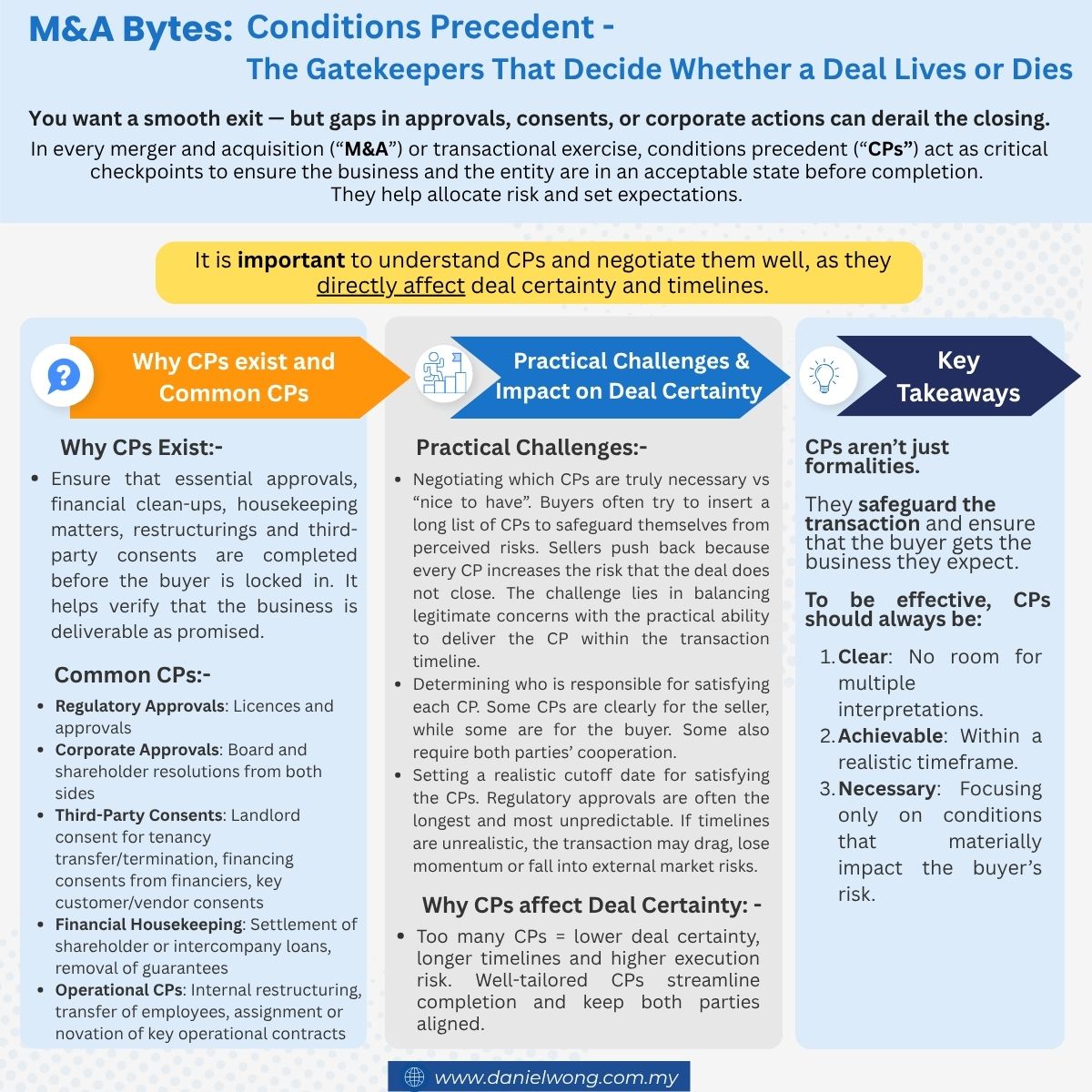
You want a smooth exit – but gaps in approvals, consents, or corporate actions can derail the closing.
In every merger and acquisition (“M&A”) or transactional exercise, conditions precedent (“CPs”) act as critical checkpoints to ensure the business and the entity are in an acceptable state before completion. They help allocate risk and set expectations.
It is important to understand CPs and negotiate them well, as they directly affect deal certainty and timelines.
Why CPs exist and Common CPs
- Regulatory Approvals: Licences and approvals
- Corporate Approvals: Board and shareholder resolutions from both sides
- Third-Party Consents: Landlord consent for tenancy transfer or termination, financing consents from financiers, key customer or vendor consents
- Financial Housekeeping: Settlement of shareholder or intercompany loans, removal of guarantees
- Operational CPs: Internal restructuring, transfer of employees, assignment or novation of key operational contracts
Practical Challenges & Impact on Deal Certainty
Practical Challenges:-
- Negotiating which CPs are truly necessary vs “nice to have”.
- Buyers often try to insert a long list of CPs to safeguard themselves from perceived risks. Sellers push back because every CP increases the risk that the deal does not close.
- The challenge lies in balancing legitimate concerns with the practical ability to deliver the CP within the transaction timeline.
- Determining who is responsible for satisfying each CP.
- Some CPs are clearly for the seller, while some are for the buyer. Some also require both parties’ cooperation.
- Setting a realistic cutoff date to satisfy the CPs.
- Regulatory approvals are often the longest and most unpredictable. If timelines are unrealistic, the transaction may drag on, lose momentum or face external market risks.
Why CPs affect Deal Certainty:-
- Too many CPs can lower deal certainty. This, in turn, would result in longer timelines and higher execution risks.
- Thus, well-tailored CPs would streamline completion and keep both parties aligned.
🔑 Key Takeaway:
CPs aren’t just formalities. They safeguard the transaction and ensure that the buyer gets the business they expect.
To be effective, CPs should always be:
- Clear: Leaves no room for multiple interpretations.
- Achievable: To be negotiated within a realistic timeframe.
- Necessary: Focusing only on conditions that materially impact the buyer’s risk.
In Essence:
Disclaimer: The content of this article is intended for general informational purposes only and does not constitute formal legal advice.
Our Corporate team regularly advises local and international corporations on mergers and acquisitions (M&A), cross-border transactions, joint ventures, and corporate restructuring. We also provide comprehensive support for shareholders’ agreements and general commercial advisory to help businesses navigate the Malaysian regulatory landscape.
For legal assistance or further inquiries regarding your corporate matters, please feel free to contact us.
