

M&A Bytes: Change of Control Clauses – The Silent Trigger in Your Contracts
Deals don’t fail because of price – they fail because a silent clause somewhere gives someone else the power to intervene.
Change of control (“COC”) clauses often sit quietly in commercial contracts until an M&A transaction triggers them.
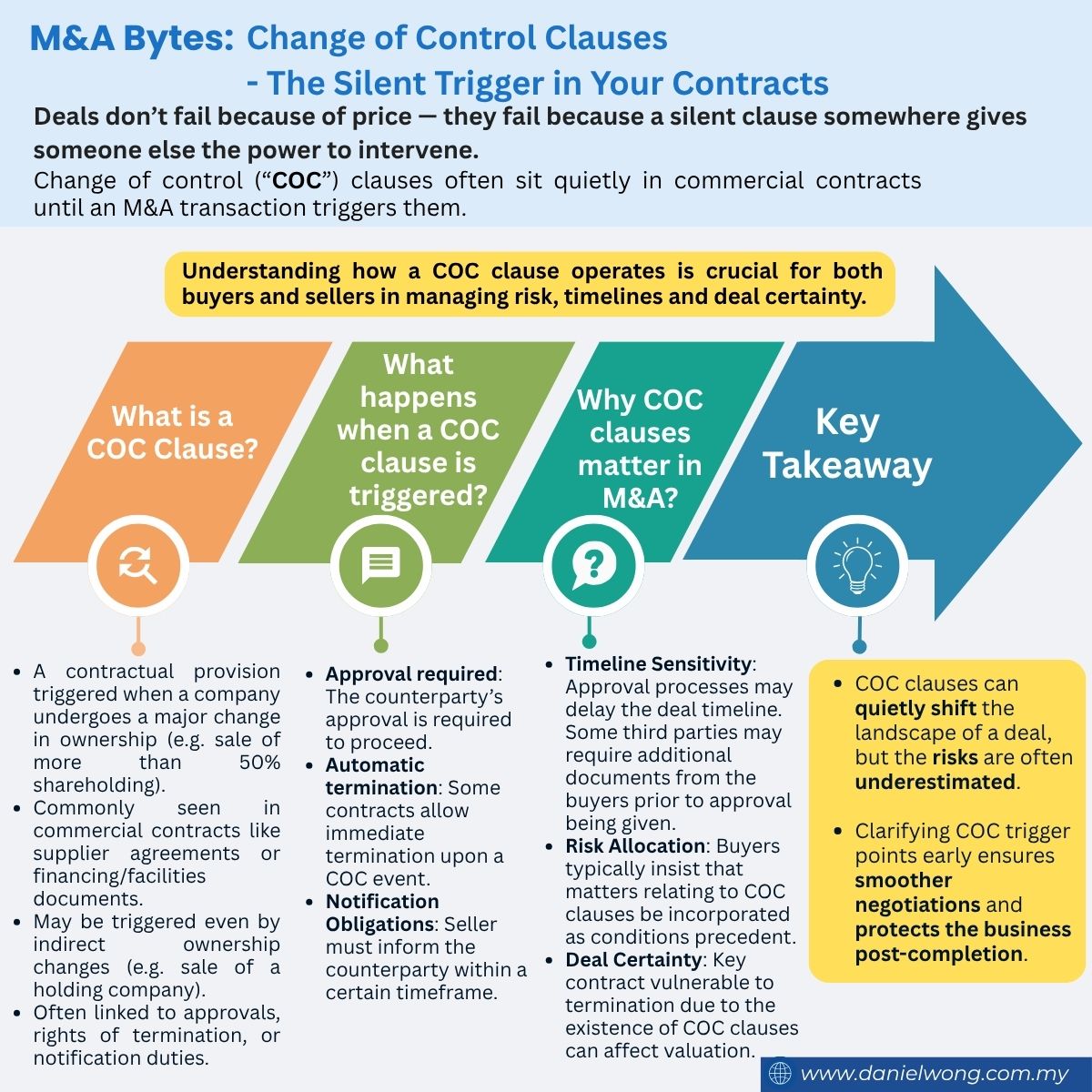
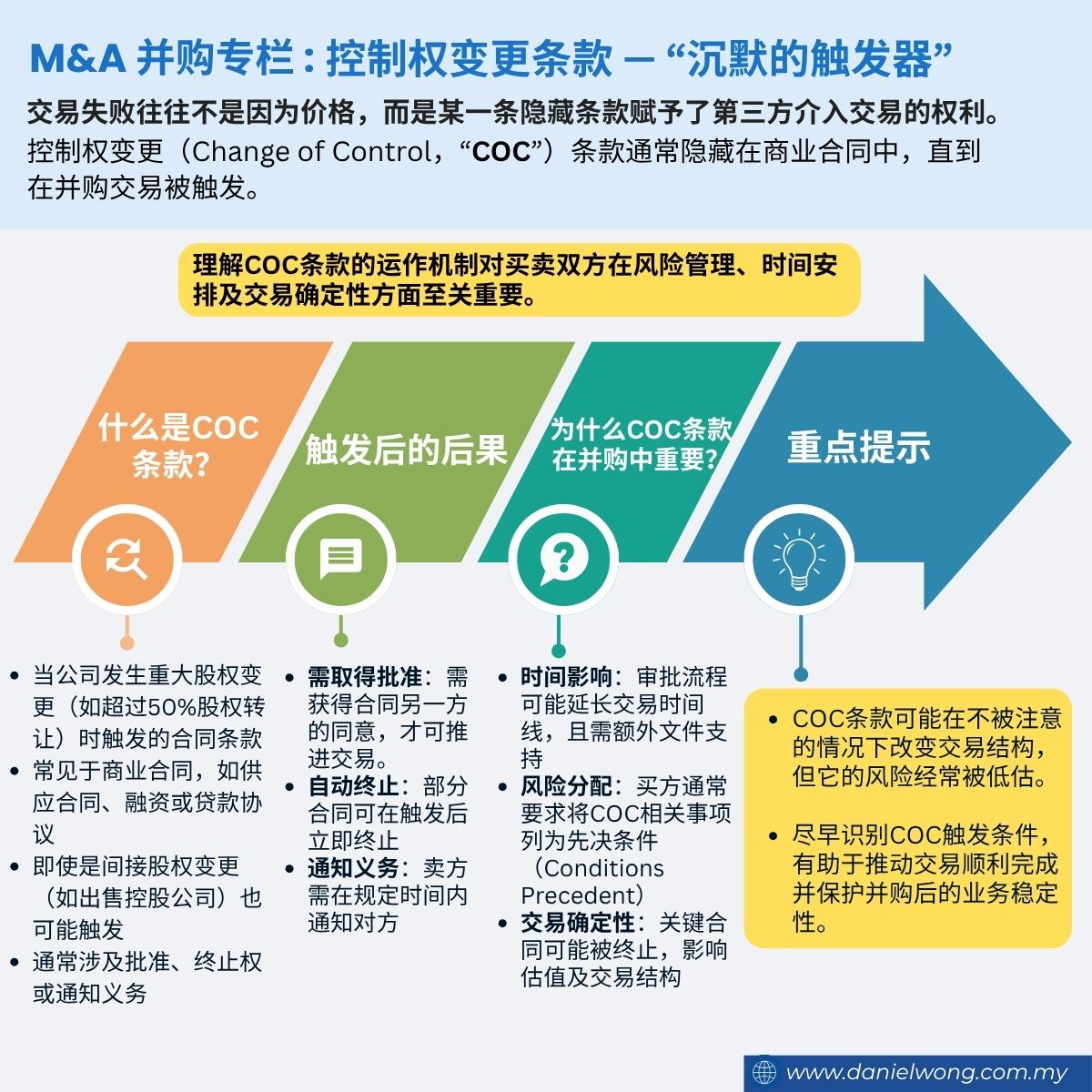
Understanding how a COC clause operates is crucial for both buyers and sellers in managing risk, timelines and deal certainty.
What is a COC clause?
- A contractual provision triggered when a company undergoes a major change in ownership (e.g. a sale of more than 50% shareholding).
- Commonly seen in commercial contracts like supplier agreements or financing/facilities documents.
- May be triggered even by indirect ownership changes (e.g. a sale of a holding company).
- Often linked to approvals, rights of termination, or notification duties.
What happens when a COC clause is triggered?
- Approval required: The counterparty’s approval is required to proceed.
- Automatic termination: Some contracts allow immediate termination upon a COC event.
- Notification Obligations: The seller must inform the counterparty within a certain timeframe.
Why COC clauses matter in M&A?
- Timeline Sensitivity: Approval processes may delay the deal timeline. Some third parties may require additional documents from the buyers prior to approval being given.
- Risk Allocation: Buyers typically insist that matters relating to COC clauses be incorporated as conditions precedent.
- Deal Certainty: Key contracts vulnerable to termination due to the existence of COC clauses can affect valuation.
🔑 Key Takeaway:
COC clauses can quietly shift the landscape of a deal, but the risks are often underestimated.
Clarifying COC trigger points early ensures smoother negotiations and protects the business post-completion.
In Essence:
Disclaimer: The content of this article is intended for general informational purposes only and does not constitute formal legal advice.
Our Corporate team regularly advises local and international corporations on mergers and acquisitions (M&A), cross-border transactions, joint ventures, and corporate restructuring. We also provide comprehensive support for shareholders’ agreements and general commercial advisory to help businesses navigate the Malaysian regulatory landscape.
For legal assistance or further inquiries regarding your corporate matters, please feel free to contact us.
