
M&A Bytes: Condition Precedent vs Condition Subsequent – What’s the Difference?
When it comes to completing a deal, timing isn’t just about the date – it is about the conditions.
Do you know the difference between what must happen before closing, and what can happen after?
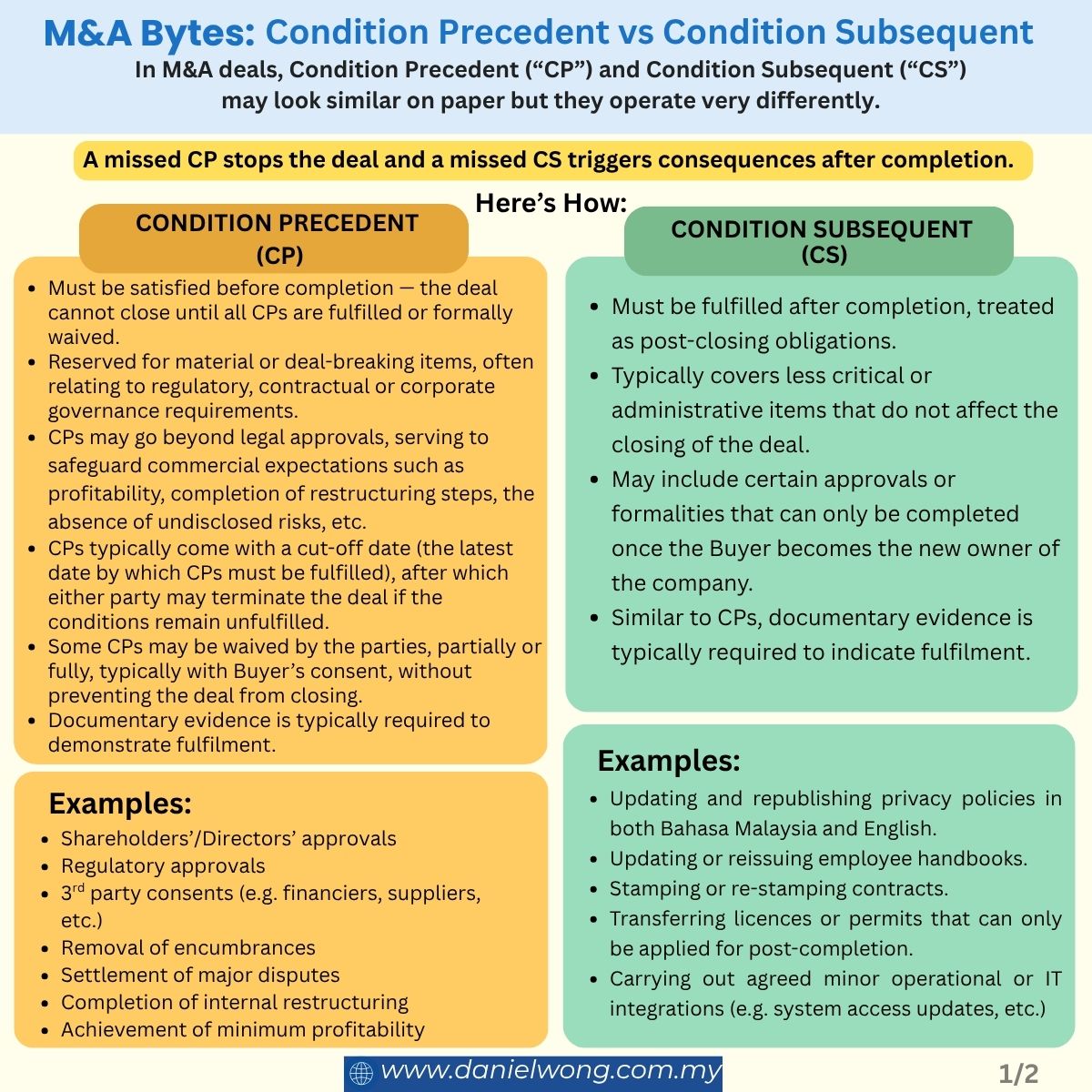
In M&A deals, Condition Precedent (“CP”) and Condition Subsequent (“CS”) may look similar on paper, but they operate very differently. A missed CP stops the deal, and a missed CS triggers consequences after completion.
Find out how these conditions impact your M&A transactions.
What are Conditions Precedent?
Condition Precedent
- Must be satisfied before completion – the deal cannot close until all CPs are fulfilled or formally waived.
- Reserved for material or deal-breaking items, often relating to regulatory, contractual or corporate governance requirements.
- CPs may go beyond legal approvals, serving to safeguard commercial expectations such as profitability, completion of restructuring steps, the absence of undisclosed risks, etc.
- CPs typically come with a cut-off date (the latest date by which CPs must be fulfilled), after which either party may terminate the deal if the conditions remain unfulfilled.
- Some CPs may be waived by the parties, partially or fully, typically with Buyer’s consent, without preventing the deal from closing.
- Documentary evidence is typically required to demonstrate fulfilment.
Examples
- Shareholders’ / Directors’ approvals
- Regulatory approvals
- Third-party consents (e.g financiers, suppliers, etc.)
- Removal of encumbrances
- Settlement of major disputes
- Completion of internal restructuring
- Achievement of minimum profitability
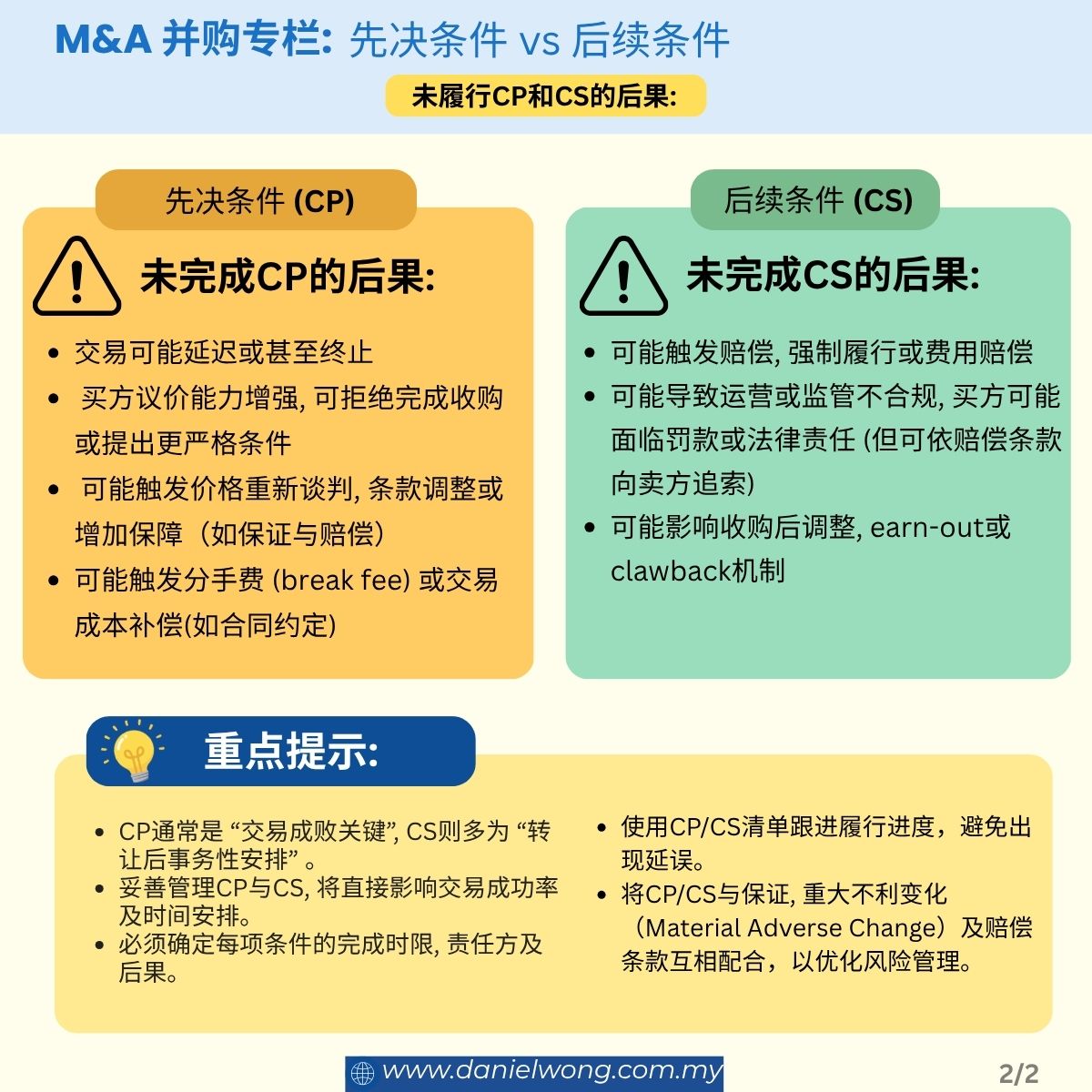
Repercussions if not fulfilled
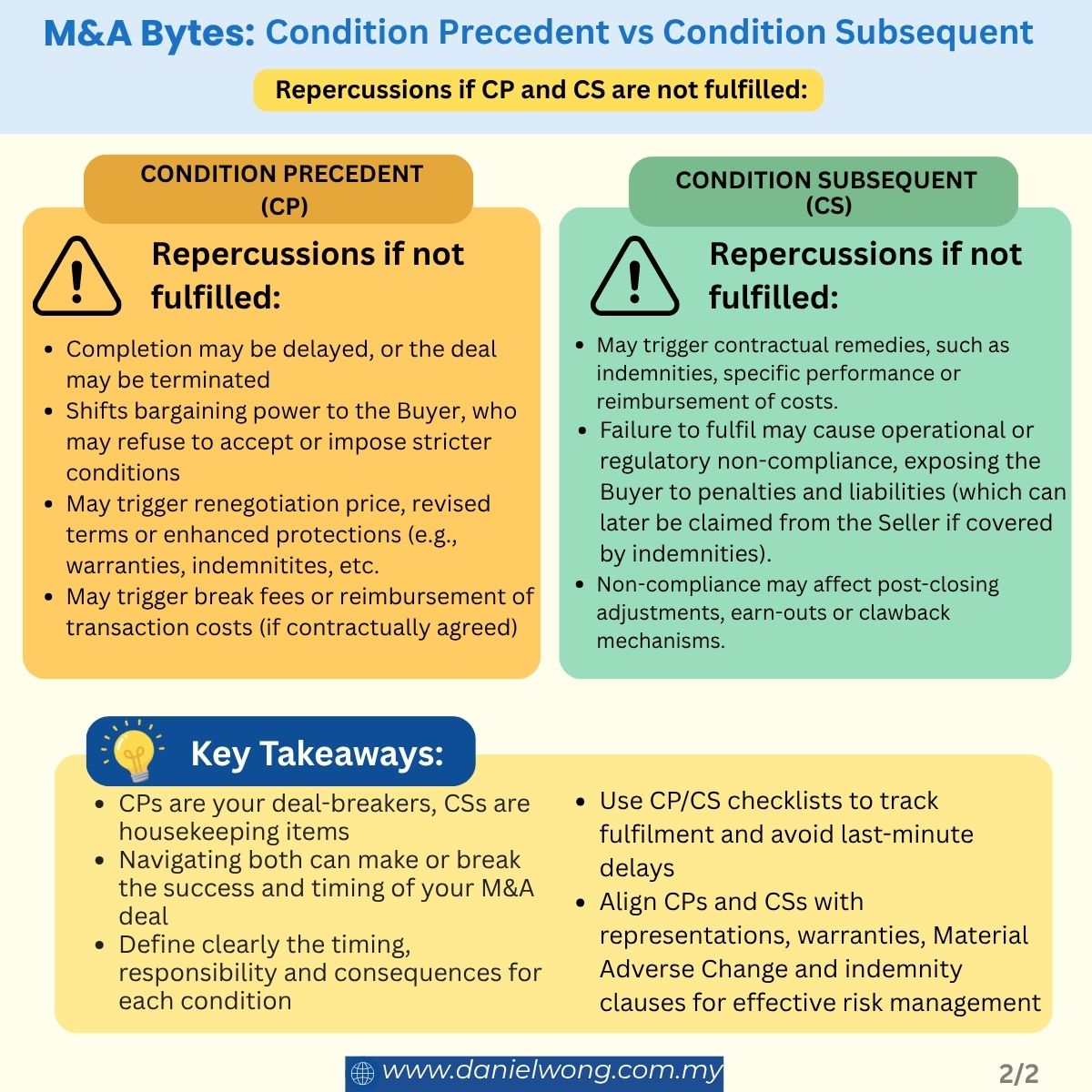
- Completion may be delayed, or the deal may be terminated.
- Failure to fulfil CPs often shifts bargaining power to the Buyer, who may refuse to accept or impose stricter conditions.
- May trigger renegotiation of price, revised terms or enhanced protections (e.g. warranties, indemnities, etc.).
- In some cases, non-fulfilment may trigger break fees or reimbursement of transaction costs (if contractually agreed).
What are Conditions Subsequent?
Condition Subsequent
- Must be fulfilled after completion, treated as post-closing obligations.
- Typically covers less critical or administrative items that do not affect the deal’s closing.
- May include certain approvals or formalities that can only be completed once the Buyer becomes the new owner of the company.
- Similar to CPs, documentary evidence is typically required to indicate fulfilment.
Examples
- Updating and republishing privacy policies in both Bahasa Malaysia and English.
- Updating or reissuing employee handbooks.
- Stamping or re-stamping contracts.
- Transferring licences or permits that can only be applied post-completion.
- Carrying out agreed minor operational or IT integrations (e.g. system access updates, etc.)
Repercussions if not fulfilled
- May trigger contractual remedies, such as indemnities, specific performance or reimbursement of costs.
- Failure to fulfil may cause operational or regulatory non-compliance, exposing the Buyer to penalties and liabilities (which can later be claimed from the Seller if covered by indemnities).
- Non-compliance may affect post-closing adjustments, earn-outs or clawback mechanisms.
🔑 Key Takeaway:
- CPs are mostly your deal-breakers, and CSs are most likely your housekeeping items.
- Navigating CPs and CSs can make or break the success and timing of your M&A deal.
- Parties should clearly define the timing, responsibility and consequences for each condition.
- Use CP / CS checklists to track fulfilment and avoid last-minute delays.
- Align CPs and CSs with representations, warranties, MAC and indemnity clauses for effective risk management.
In Essence:
Disclaimer: The content of this article is intended for general informational purposes only and does not constitute formal legal advice.
Our Corporate team regularly advises local and international corporations on mergers and acquisitions (M&A), cross-border transactions, joint ventures, and corporate restructuring. We also provide comprehensive support for shareholders’ agreements and general commercial advisory to help businesses navigate the Malaysian regulatory landscape.
For legal assistance or further inquiries regarding your corporate matters, please feel free to contact us.
