
M&A Bytes: Corporate Liabilities – More Than Just Loans (Part 1)
Would you still buy – or could you still sell – if the business you thought you knew had problems you didn’t even know existed?
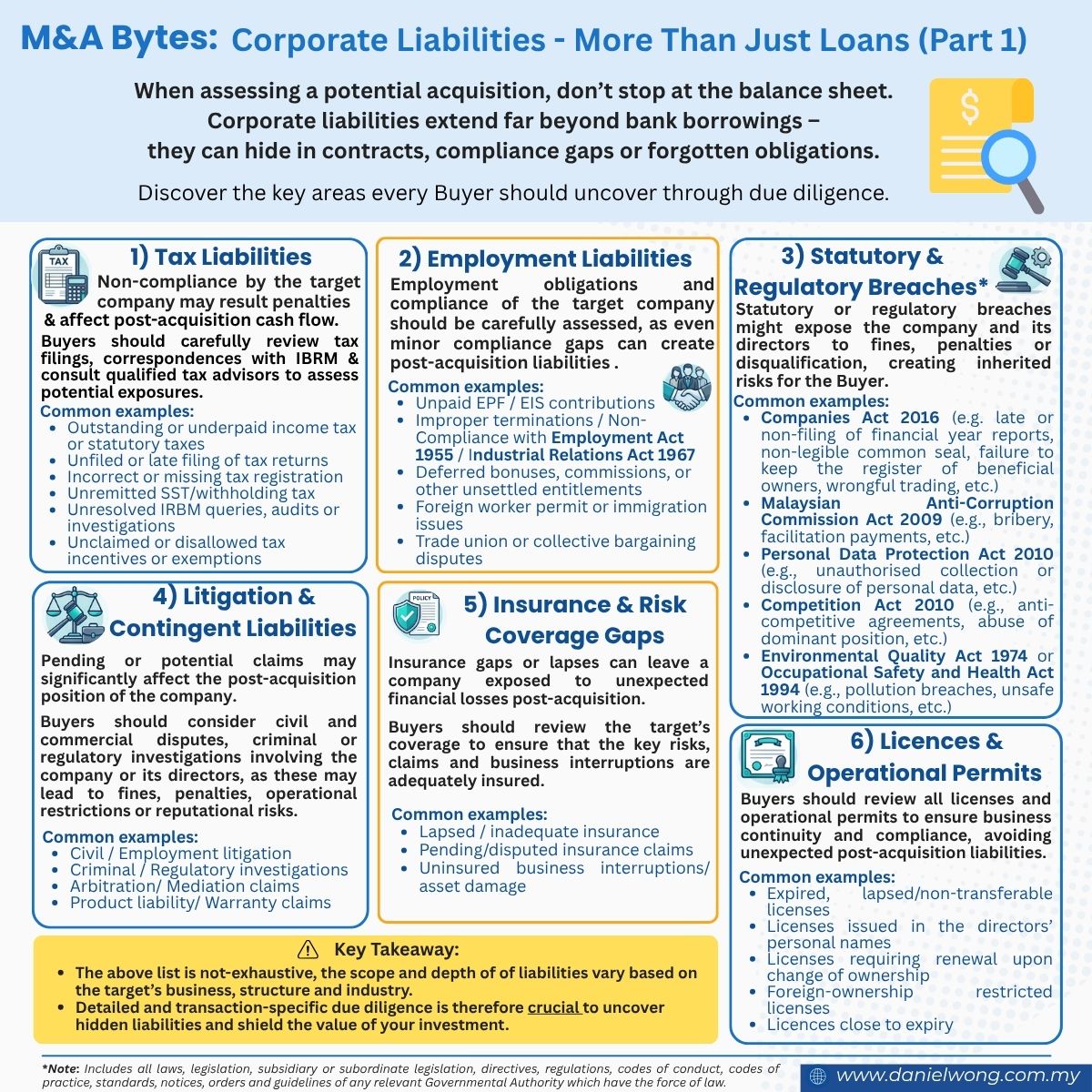
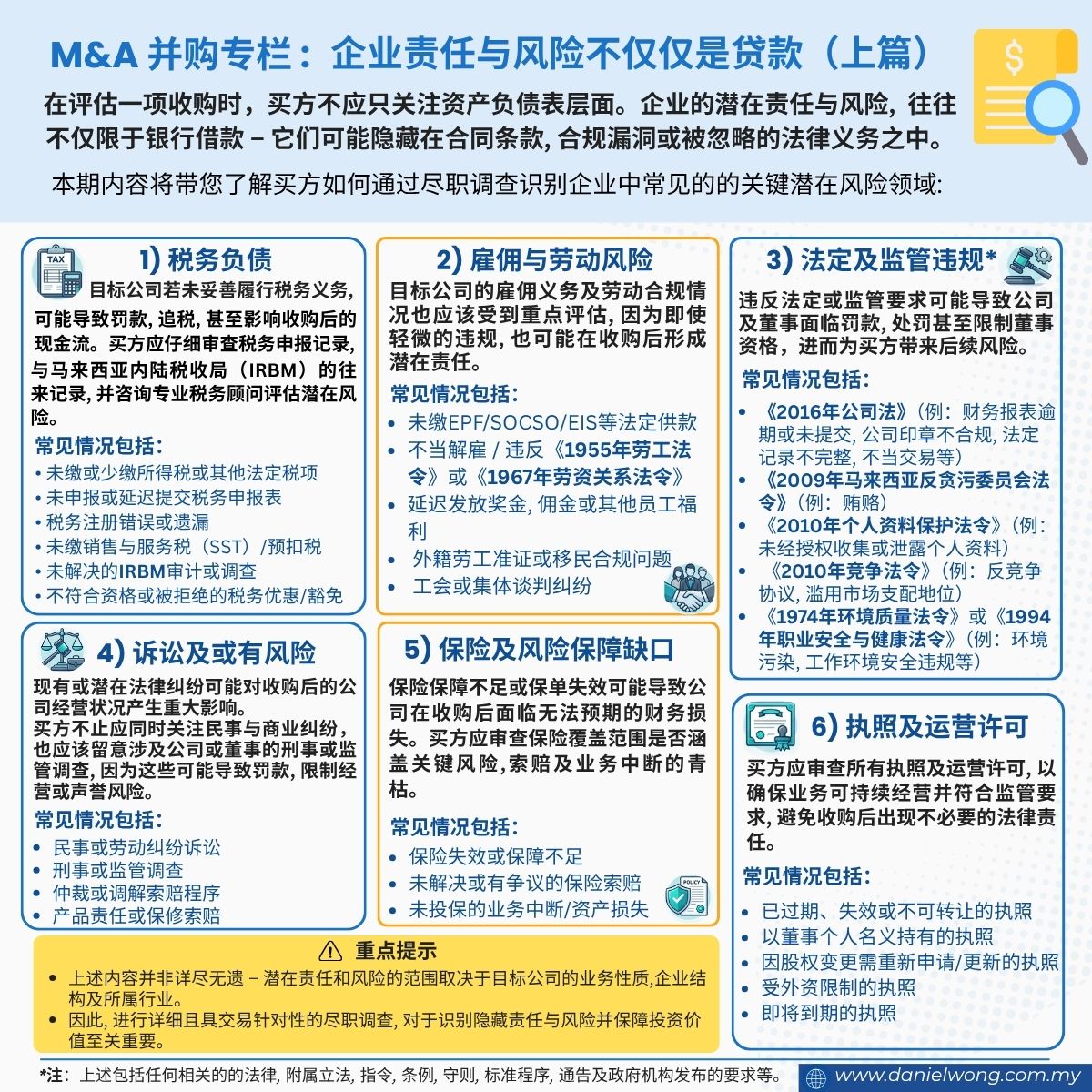
When assessing a potential acquisition, don’t stop at the balance sheet. Corporate liabilities extend far beyond bank borrowings – they can hide in contracts, compliance gaps or forgotten obligations.
In Part 1 of Corporate Liabilities – More than Just Loans, discover the key areas every Buyer should uncover through due diligence.
Key Areas to Uncover:
(1) Tax Liabilities
- Outstanding or underpaid income tax or other statutory taxes
- Unfiled or late filing of tax return
- Incorrect or missing tax registration
- Unremitted SST/ withholding tax
- Unresolved IBRM queries, audits or investigations
- Unclaimed or disallowed tax incentives or exemptions
(2) Employment Liabilities
The target company’s employment obligations and compliance should be carefully assessed, as even minor compliance gaps can create post-acquisition liabilities.
Common scenarios include:
- Unpaid EPF, SOCSO or EIS contributions
- Improper terminations or non-compliance with the Employment Act 1955 / Industrial Relations Act 1967
- Deferred bonuses, commissions or other unsettled entitlements
- Foreign worker permit or immigration issues
- Trade union or collective bargaining disputes
(3) Statutory & Regulatory Breaches*
Statutory or regulatory breaches might expose the company and its directors to fines, penalties or even disqualification, creating inherited risks for the Buyer.
Common examples:
- Companies Act 2016 (e.g. late or non-filing of financial year reports, non-legible common seal, failure to keep the register of beneficial owners, fraudulent or wrongful trading, etc.)
- Malaysian Anti-Corruption Commission Act 2009 (e.g. bribery, facilitation payments, failure to maintain anti-corruption policies, etc.)
- Personal Data Protection Act 2010 (e.g., unauthorised collection or disclosure of personal data,
- Competition Act 2010 (e.g. anti-competitive agreements, abuse of dominant position, etc.)
- Environmental Quality Act 1974 or Occupational Safety and Health Act 1994 (e.g. pollution breaches, unsafe working conditions, failure to obtain environmental approvals, etc.)
*Note: Includes all laws, legislation, subsidiary or subordinate legislation, directives, regulations, codes of conduct, codes of practice, standards, notices, orders and guidelines of any relevant Governmental Authority which have the force of law.
(4) Litigation & Contingent Liabilities
Pending or potential claims may significantly affect the company’s post-acquisition position.
Buyers should consider not only civil and commercial disputes, but also any criminal or regulatory investigations involving the company or its directors, as these may lead to fines, penalties, operational restrictions or reputational risks.
Common examples:
- Civil or employment litigation
- Criminal or regulatory investigations
- Arbitration or mediation claims
- Product liability or warranty claims
(5) Insurance & Risk Coverage Gaps
Insurance gaps or lapses can leave a company exposed to unexpected financial losses post-acquisition.
Buyers should carefully review the target’s coverage to ensure that the key risks, claims and business interruptions are adequately insured.
Common examples:
- Lapsed or inadequate insurance
- Pending or disputed insurance claims
- Uninsured business interruptions or asset damage.
(6) Licences & Operational Permits
Buyers should review all licences and operational permits to ensure business continuity and compliance. This is to avoid unexpected post-acquisition liabilities.
Common examples:
- Expired, lapsed or non-transferable licences
- Licences issued in the directors’ personal names
- Licences requiring renewal upon change of ownership
- Foreign-ownership restricted licences
- Licences close to expiry
🔑 Key Takeaway:
The above list is not exhaustive – the scope and depth of liabilities vary based on the target’s business, structure and industry.
A detailed and transaction-specific due diligence is therefore crucial to uncover hidden liabilities and shield the value of a buyer’s investment.
In Essence:
Disclaimer: The content of this article is intended for general informational purposes only and does not constitute formal legal advice.
Our Corporate team regularly advises local and international corporations on mergers and acquisitions (M&A), cross-border transactions, joint ventures, and corporate restructuring. We also provide comprehensive support for shareholders’ agreements and general commercial advisory to help businesses navigate the Malaysian regulatory landscape.
For legal assistance or further inquiries regarding your corporate matters, please feel free to contact us.
